Breaking out of the Cage We Can't See
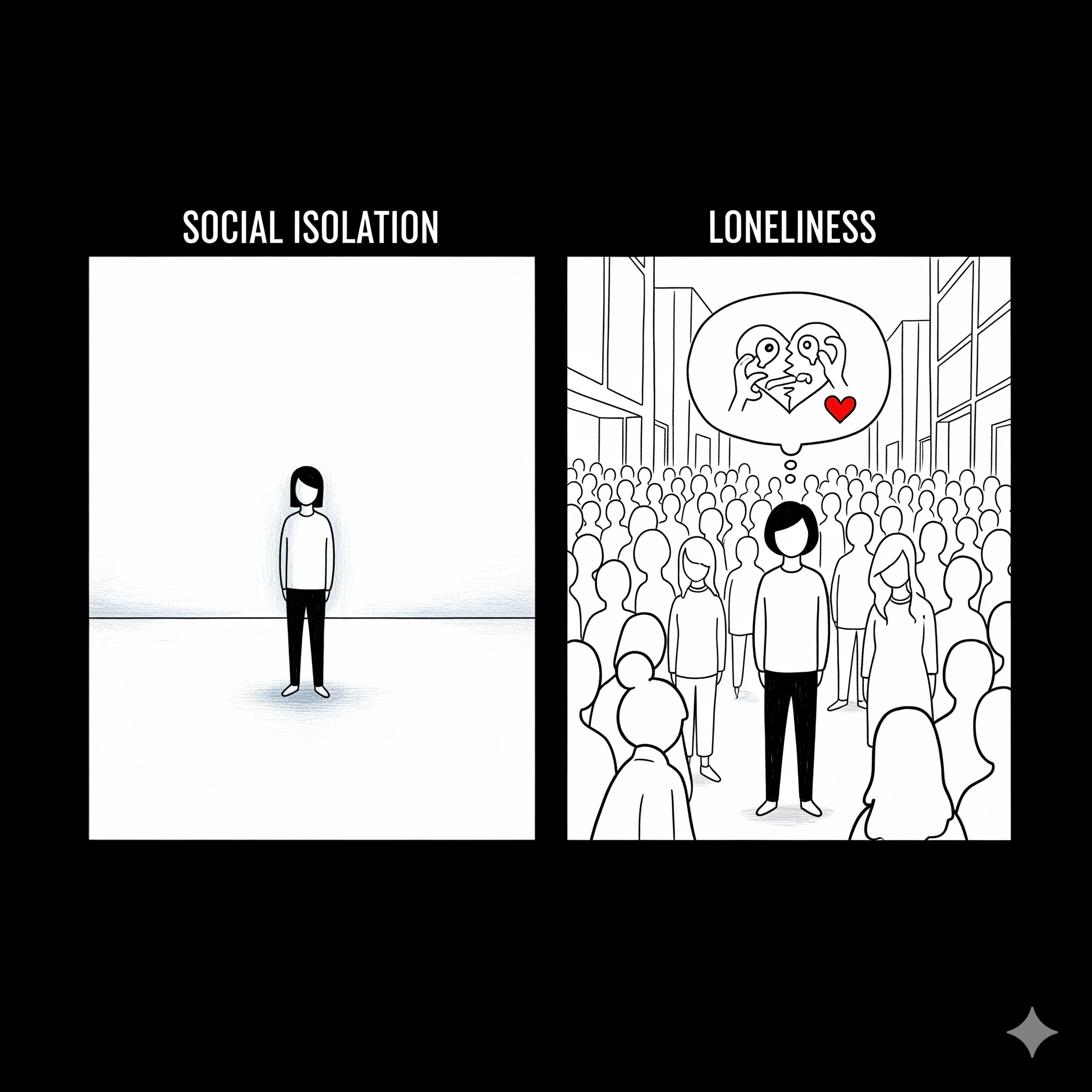
We need to talk about a silent killer. A public health crisis that hides in plain sight, and its lethality is staggering.
A lack of strong social connection carries the same risk to life expectancy as smoking 15 cigarettes a day. Globally, loneliness is linked to an estimated 100 deaths every single hour.
Let that sink in.
These are not just statistics; they are lives extinguished by an epidemic of disconnection. This is not a footnote in our public health discourse; it is a profound crisis, deeply intertwined with spiraling rates of substance use. It is both a desperate escape and a cruel, isolating consequence.
More Than Just Being Alone
We must be clear about what we are fighting.
Loneliness is not the same as being alone. It is the subjective, distressing experience of a gap between the social connection you want and the connection you have.
This is not a mood. It is not a personal failing.
It is a biological non-negotiable, a fundamental human need as vital to our survival as food and water. When that need goes unmet, the consequences are devastating.
The Vicious, Self-Reinforcing Cycle
The relationship between loneliness and substance use disorder is a cruel, complex loop where each condition relentlessly fuels the other.
Loneliness as the Fuel
Many of us know this desperation intimately. For someone drowning in the emotional pain of disconnection, substances can feel like a lifeline. It is a desperate act of self-medication to silence the profound distress of being alone. There's a deep, biological reason for this. Our need for connection is wired into our brains, regulated by the same opioid receptors that substances can activate. When we are deprived of genuine social bonds, the brain can be driven to seek a chemical substitute. This isn’t a moral failure; it’s a physiological response to unbearable pain.
Addiction as the Driver
At the same time, the crushing weight of stigma and shame forces people into secrecy. It’s a weight many of us have carried—the fear of being judged, of being seen as unworthy, unlovable, a lost cause. That fear pushes us away from the very relationships that could save us.
Addiction breeds isolation. Isolation deepens the loneliness. And the loneliness demands relief.
The cycle resumes.
The Flawed Logic of "Tough Love"
How does our society often respond? With "tough love"; the unanswered phone calls, the locked doors, the ultimatums delivered when what we need most is compassion.
Let us be unequivocally clear: this approach is not just ineffective; it is counterproductive and cruel. If we know disconnection is the poison, how can we be convinced that isolation is the cure?
The solution is not to intensify the pain. The solution is compassionate, accessible social support.
(Stay tuned for a future issue where we will dive deeper into the myths of "tough love" and explore effective, compassionate alternatives.)
Building a World That Connects Us
We cannot medicate our way out of this crisis.
We must build our way out.
This requires a fundamental shift towards a society that intentionally fosters connection. A strong social fabric is the most powerful form of preventative medicine we have. This means investing in our social infrastructure: not just libraries and parks, but community gardens where conversations can grow, public squares designed for people, and well-lit walking paths that encourage us to be outside, together.
8 Pathways to Connection
While we work to build a more connected world, we can take steps right now to fight back. Here are a few pathways you can explore:
Be Proactive: Don't wait for an invitation. Reach out to one person and invite them for a coffee or a walk.
Help Others: Volunteering provides a profound sense of purpose and is a natural way to build new social connections.
Get Creative: Join an online or local group focused on something you enjoy—art, music, gardening, or writing.
Stay Active: Check your local community centre for low-cost classes, clubs, or social groups that align with your interests.
Use Technology Wisely: Use social media to reconnect with old friends or schedule a video call with family far away.
Adopt a Pet: If you are able, the companionship of an animal can provide unconditional love and a structured routine.
Try Citizen Science: Use an app to contribute to real scientific projects and connect with the online community involved.
Seek Support: If loneliness is severely affecting you, there is no shame in reaching out. This is a sign of strength.
We began with a harrowing fact: that disconnection is as lethal as a lifelong smoking habit.
The antidote is not a pill.
It is us.
This conversation is happening right now in the Weather the Storm Outreach Skool Community, a place where your story matters, where your struggles are understood, and where you don't have to explain the weight you’ve been carrying.
This isn't just a community; it's a lifeline. You are not alone in this fight
What are your thoughts? How has loneliness impacted your journey?
Click Here to share your thoughts and be understood.
With hope and solidarity,
Scott Roose
Founder, Weather the Storm Outreach